



Roasting technology with precise control of temperature, timing, and repeatability

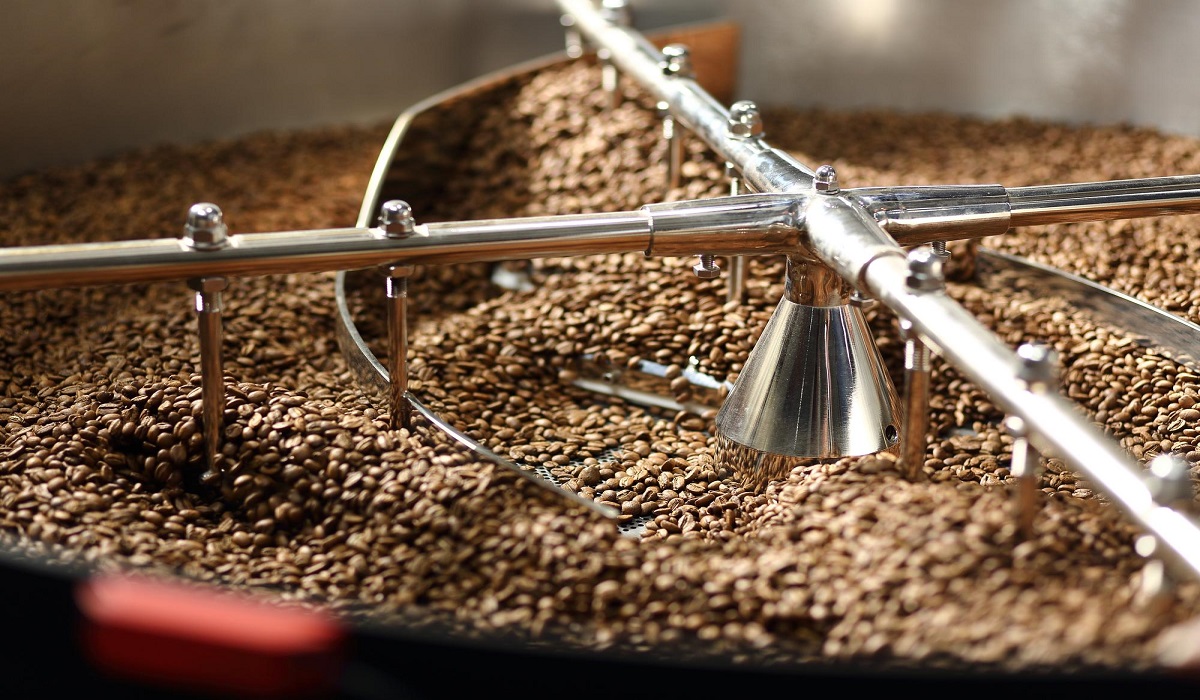
Coffee roasting technology is one of the most crucial components of the coffee industry, as the final quality of coffee largely depends on this sensitive stage. Green coffee beans harvested from farms do not yet possess their distinctive aroma or flavor; it is the roasting process that reveals the true character of the coffee.
In recent years, coffee roasting technology has undergone significant transformations, moving from traditional, manual methods to modern, precise, and intelligent systems. These advancements allow for accurate control over various parameters during the roasting process, elevating the overall quality of the coffee.
Parto Padideh Pars Company has invested in the latest coffee roasting technology from Italy, establishing new standards in Iran’s coffee industry. By employing the air roasting method—one of the most advanced roasting techniques in the world—the company produces products with consistent and reliable quality, including Coffee beans for roasting and Roasted coffee beans for cafés.
Coffee Roasting Technology and Comparison of Methods
Coffee roasting methods can be divided into two main categories: direct heat transfer methods, such as drum or pan roasting, and indirect heat transfer methods, such as air roasting. In drum roasting, considered the most traditional and common method globally, coffee beans are placed inside a rotating metal cylinder. Heat is transferred through direct contact between the beans and the hot surface of the cylinder, completing the roasting process.
This method offers advantages such as preserving natural oils and creating a rich flavor, but it also presents drawbacks, including uneven heat distribution, the risk of burning one side of the bean, and limited precision in temperature control.
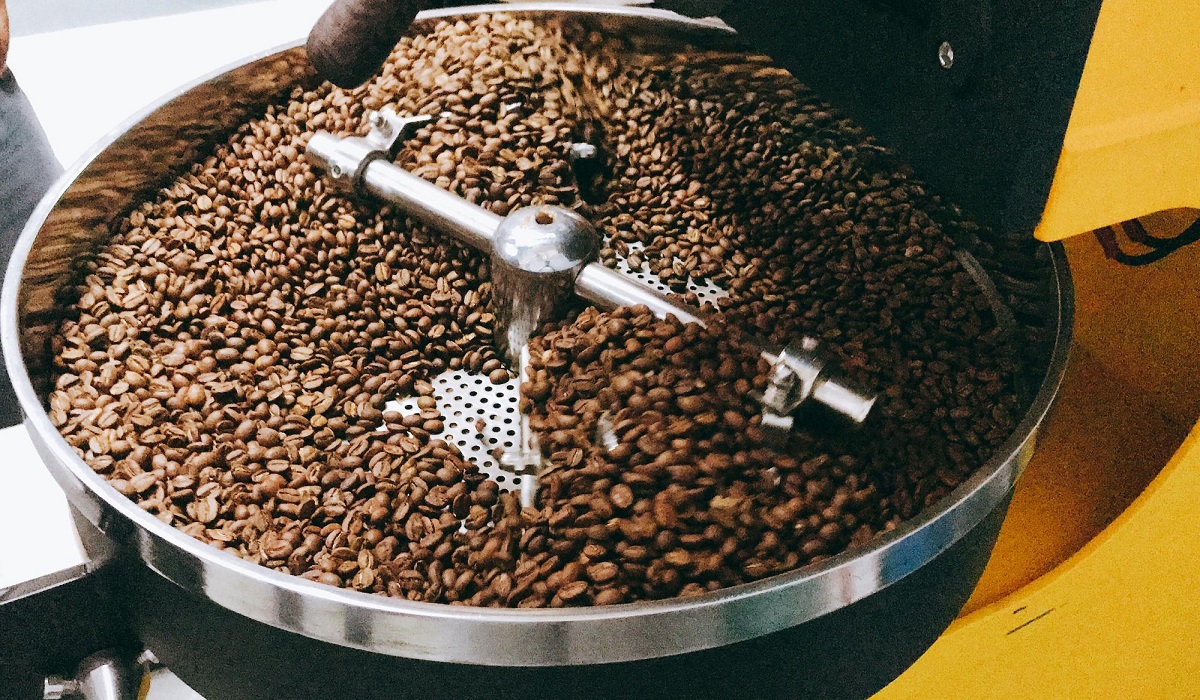
In contrast, air roasting technology, utilized by leading companies like Parto Padideh, has revolutionized coffee roasting. In this method, coffee beans are surrounded by a controlled stream of hot air (typically between 200°C and 250°C) to ensure uniform heating.
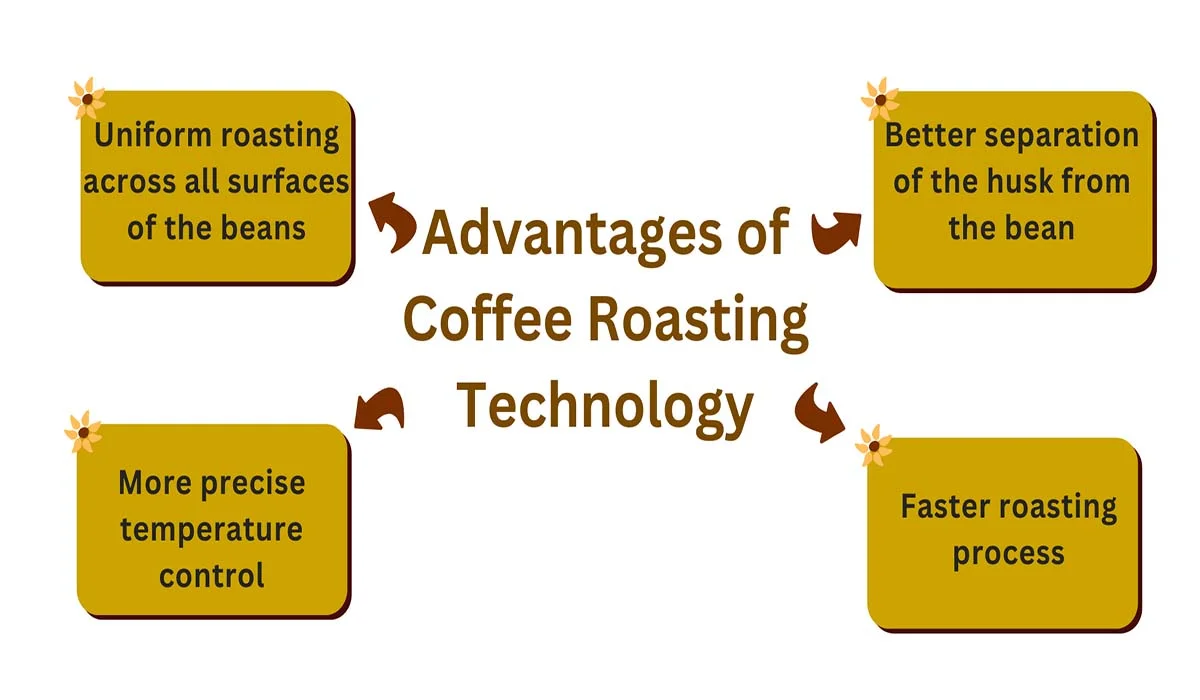
Key benefits of this approach include:
- Uniform roasting across all surfaces of the beans
- More precise temperature control
- Faster roasting process
- Better separation of the husk from the bean
The Importance of Precise Temperature Control in Coffee Roasting
Temperature is the most critical factor in the coffee roasting process, and precise control of it plays a vital role in determining the final quality of the product. During roasting, coffee beans undergo several stages, each requiring a specific temperature. The first stage, known as the “drying” stage, typically occurs at 120–160°C, during which the moisture in the beans evaporates.
Next, in the “yellowing” stage, the temperature rises to approximately 160–180°C, and the beans change color from green to yellow. As the temperature further increases to around 200°C, the Maillard reaction begins, which is responsible for developing the distinctive aroma and flavor of the coffee.
Finally, at temperatures between 200–230°C, the first crack and then the second crack occur, during which the beans expand, and an audible cracking sound is produced.
Modern coffee roasting technology, utilizing advanced sensors and precise control algorithms, enables the adjustment and maintenance of optimal temperatures at every stage of the roasting process.
Even minor deviations from the ideal temperature can have a significant impact on the final flavor profile. For example, excessively high temperatures result in a burnt and bitter taste, whereas insufficient temperatures lead to an underdeveloped and sour outcome.
The Role of Timing in Roasting Profiles
Timing is equally important as temperature in coffee roasting, with both being essential elements that define a coffee’s roasting profile. The total roasting time typically ranges from 8 to 15 minutes, depending on factors such as bean type, moisture content, altitude, processing method, and desired flavor profile.
Precise timing at each stage directly affects flavor and aroma development. Faster roasts tend to produce coffee with higher acidity and stronger aroma, whereas longer roasts result in sweeter and more complex flavors.
Advanced systems like air roasting allow operators to precisely schedule both the overall roasting time and the duration of each stage.
Repeatability: The Key to Mass Production
Repeatability in coffee roasting refers to the ability to produce consistent-quality products across different batches, which is crucial for large-scale producers who must guarantee uniformity for their customers.
In traditional roasting methods, repeatability largely depended on the skill and experience of the roast master. Even highly skilled operators sometimes faced challenges in maintaining consistent quality due to environmental changes, variations in raw bean quality, or human error.
Modern coffee roasting technologies, such as those used by Parto Padideh, allow for storage and automated execution of roasting profiles. Once the ideal profile for a specific coffee type is identified, all parameters—temperature, time, and airflow—are saved in the system.
In subsequent productions, the automated execution ensures identical characteristics in the final product, including Roasted coffee beans wholesale in Iran and Roasted coffee brands in Iran.
Conclusion
Coffee roasting technology is a vital process in defining the authentic character of coffee, evolving from traditional methods to modern, intelligent systems. The two main roasting methods include traditional drum roasting (direct heat transfer) and modern air roasting (indirect heat transfer).
While drum roasting preserves natural oils and produces rich flavors, it faces challenges in uniformity. Air roasting, on the other hand, offers uniform roasting, precise temperature control, and faster processing, making it increasingly preferred.
Accurate temperature and timing control are essential, as coffee beans undergo different stages (120–230°C) that directly influence the final flavor. Repeatability, achieved through the storage and automated execution of roasting profiles, ensures consistent quality for customers, a hallmark of modern coffee roasting technology.
Frequently Asked Questions (FAQ)
1. What is coffee roasting technology?
Coffee roasting technology encompasses various processes, equipment, and methods used to roast green coffee beans to achieve the desired flavor and aroma. This technology ranges from traditional systems to modern and intelligent roasting machines.
2. What are the advantages of air roasting technology (Air Roasting)?
In air roasting technology, the beans are roasted by a uniform stream of hot air, ensuring that heat is applied evenly and precisely to the entire surface of each bean. This method enhances quality, flavor consistency, and roasting speed, ultimately producing coffee that is cleaner and more reliable, including Coffee beans for roasting and Roasted coffee beans for cafés.
3. What is the Maillard reaction in coffee roasting?
The Maillard reaction is one of the most important chemical reactions in coffee roasting, occurring at approximately 200°C, and it is responsible for developing the complex aroma and flavor of the coffee.
4. Which roasting method is more suitable for industrial production?
The air roasting method, due to its uniformity, precise temperature control, high speed, and the ability to store roasting profiles, is the most suitable option for industrial and large-scale coffee production, including Coffee beans for roasting and Roasted coffee beans for cafés.